Waterproofing basements and cellars in tropical climates: Best materials and methods: common mistakes that cost you money
The Hidden Money Pit: Why Your Basement Waterproofing Failed in the Tropics
You'd think a basement in Jakarta or Singapore would be the last place you'd need to worry about. After all, who builds underground spaces in regions where humidity hits 90% and rainfall measures in meters, not millimeters? Yet here we are, with thousands of tropical homeowners watching their below-grade spaces turn into expensive swimming pools.
The truth? Standard waterproofing approaches that work brilliantly in Toronto or Berlin fail spectacularly near the equator. I've seen contractors use the same materials and methods they'd apply in temperate zones, only to have clients calling within six months about mold, seepage, and structural cracks. Let's break down what actually works—and what's just burning your money.
The Traditional Approach: Membrane Systems
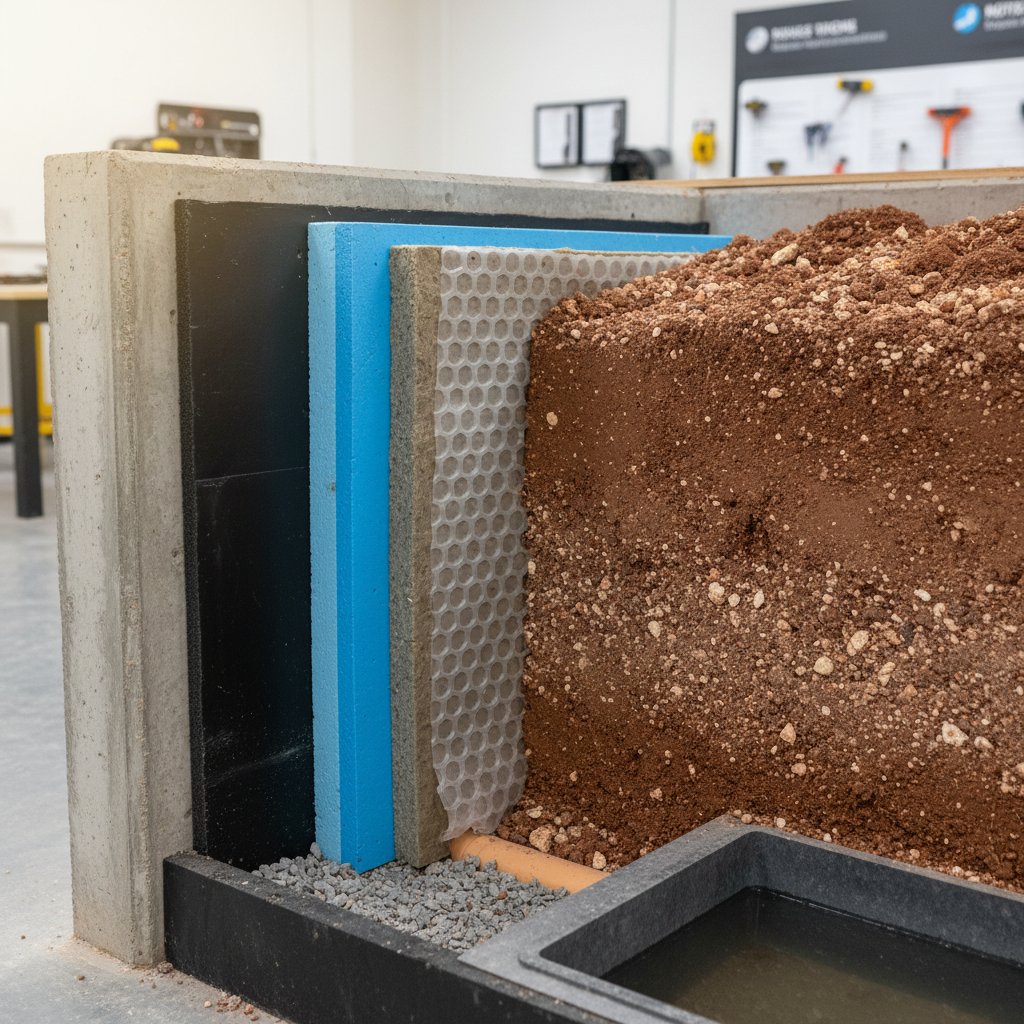
Most contractors reach for sheet membrane systems first. These rubber or polymer barriers get installed on the exterior walls before backfilling, creating a physical shield against water intrusion.
The Upside
- Proven track record in moderate climates with 40-60% effectiveness rates in tropical applications when properly installed
- Installation cost runs between $8-15 per square meter for materials alone
- Quick application means your project moves faster—typically 2-3 days for a standard residential basement
- Visible protection that inspectors can verify before covering
The Downside
- Heat degradation accelerates in 30°C+ temperatures, reducing lifespan from 25 years to 12-15 years
- Seam failures account for 70% of membrane system breakdowns in high-humidity environments
- Hydrostatic pressure from saturated tropical soils can push membranes away from walls, creating gaps
- Zero vapor control means condensation still forms on interior surfaces, breeding mold colonies within weeks
- Repair nightmares require excavation, with costs hitting $5,000-12,000 for even minor fixes
The Modern Alternative: Crystalline Waterproofing Systems
Crystalline technology takes a different approach entirely. These cement-based compounds penetrate concrete pores and react with moisture to form insoluble crystals that block water pathways at the molecular level.
The Upside
- Self-healing properties reactivate when new cracks form, with crystals growing to seal gaps up to 0.4mm wide
- Humidity resistance actually improves performance—the system needs moisture to function
- Permanent integration becomes part of the concrete structure itself, lasting the building's lifetime
- Interior application possible on existing basements without excavation, saving $15,000-30,000 in digging costs
- Breathable barrier allows vapor transmission while blocking liquid water, preventing the greenhouse effect
The Downside
- Higher upfront investment at $18-28 per square meter for materials and application
- Surface preparation critical—requires shotblasting or acid etching that adds 1-2 days to timelines
- Application sensitivity demands experienced contractors; DIY attempts fail 85% of the time
- Curing period extends 7-14 days in tropical heat before full effectiveness kicks in
- Won't fix major structural issues like foundation settlement or severe cracking beyond 2mm
Head-to-Head Comparison
| Factor | Membrane Systems | Crystalline Systems |
|---|---|---|
| Initial Cost | $8-15/m² | $18-28/m² |
| Lifespan (Tropical) | 12-15 years | 50+ years |
| Repair Accessibility | Requires excavation | Interior touch-ups possible |
| Humidity Performance | Degrades faster | Enhanced by moisture |
| Installation Time | 2-3 days | 3-5 days |
| Mold Prevention | Poor (vapor trap) | Excellent (breathable) |
The Money-Saving Reality Check
Here's what nobody tells you: membrane systems look cheaper until year three. That's when tropical humidity starts winning. The average homeowner spends $8,000 on initial membrane installation, then another $6,500 on mold remediation within 18 months, followed by a $11,000 re-waterproofing job by year five.
Crystalline systems cost $14,000 upfront for the same basement. Full stop. No callbacks, no mold specialists, no excavators tearing up your landscaping.
The biggest mistake? Hiring contractors who learned their trade in temperate zones. They'll confidently apply methods that work perfectly in London but fail miserably in Manila. Ask potential contractors specifically about their tropical project portfolio. If they can't show you three local projects over five years old, keep looking.
Your basement shouldn't be an expensive science experiment. Choose the system that matches your climate, not just your initial budget.